

Mercasol Ireland is operated by the official Irish distributor for Auson AB, the Swedish manufacturer of Mercasol corrosion protection products.
The people who make it
Mercasol and Noxudol are made by Auson AB in Kungsbacka, Sweden — a family firm that has been producing protective chemical products since 1928, and has supplied the Swedish motor industry since 1963.
Around 200 products leave their plant for 21 market regions. Everything is manufactured under ISO 9001 and ISO 14001 certified processes, and Auson develops its formulations in its own laboratories.
Built for salt, damp and short winters
Sweden’s motor industry has spent six decades dealing with salted winter roads and coastal damp — the same combination that rusts cars in Ireland. Auson has supplied that industry since 1963, and developed a solvent-free rust-protection range with it, for production lines, service workshops and consumers alike. That is the range we bring to Ireland.
Proven on the Öresund Bridge
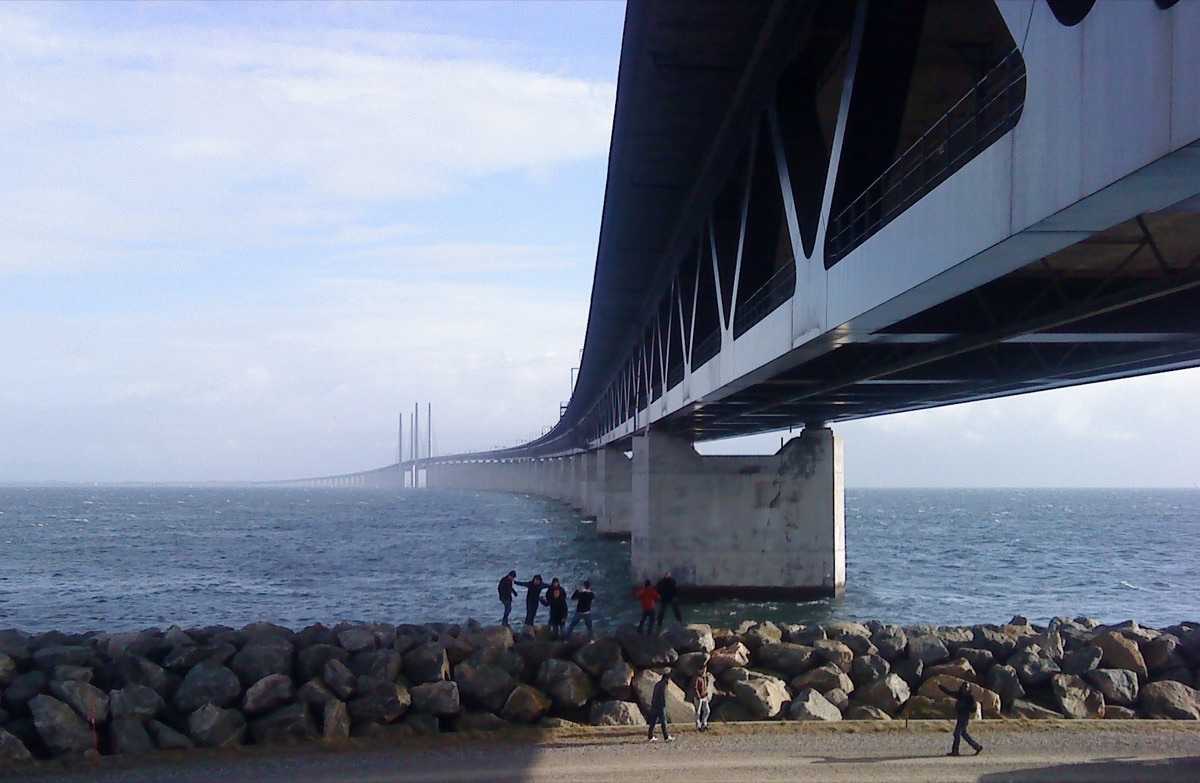
Five years after the Öresund Bridge opened between Denmark and Sweden, corrosion was found on its railing bolts. De-icing brine and chlorides carried in off the sea were collecting inside the bolt cavities — the same hidden, wet, salted conditions that rot cars on Irish roads.
Over three months in the summer of 2005, all 24,000 railing bolts were treated with Noxudol 700, a solvent-free cavity wax made by Auson.
They were opened up again in 2021 — sixteen years later. There was no corrosion and no damage. The wax level had dropped only slightly, and the nuts still came undone easily. The bridge itself was designed for a sixty-year working life.
One point worth being precise about: the bridge was treated with Noxudol 700, not Mercasol. Both are made by Auson, but they are different products for different jobs. Noxudol 700 is the solvent-free cavity wax, and it is part of the range we supply in Ireland.
Made to a standard, not just a price
Auson holds ISO 9001 (certificate SE011150) and ISO 14001 (SE011149), both issued by Bureau Veritas. Emissions from their production run at roughly half the permitted limit, and much of the range is formulated without solvents.